
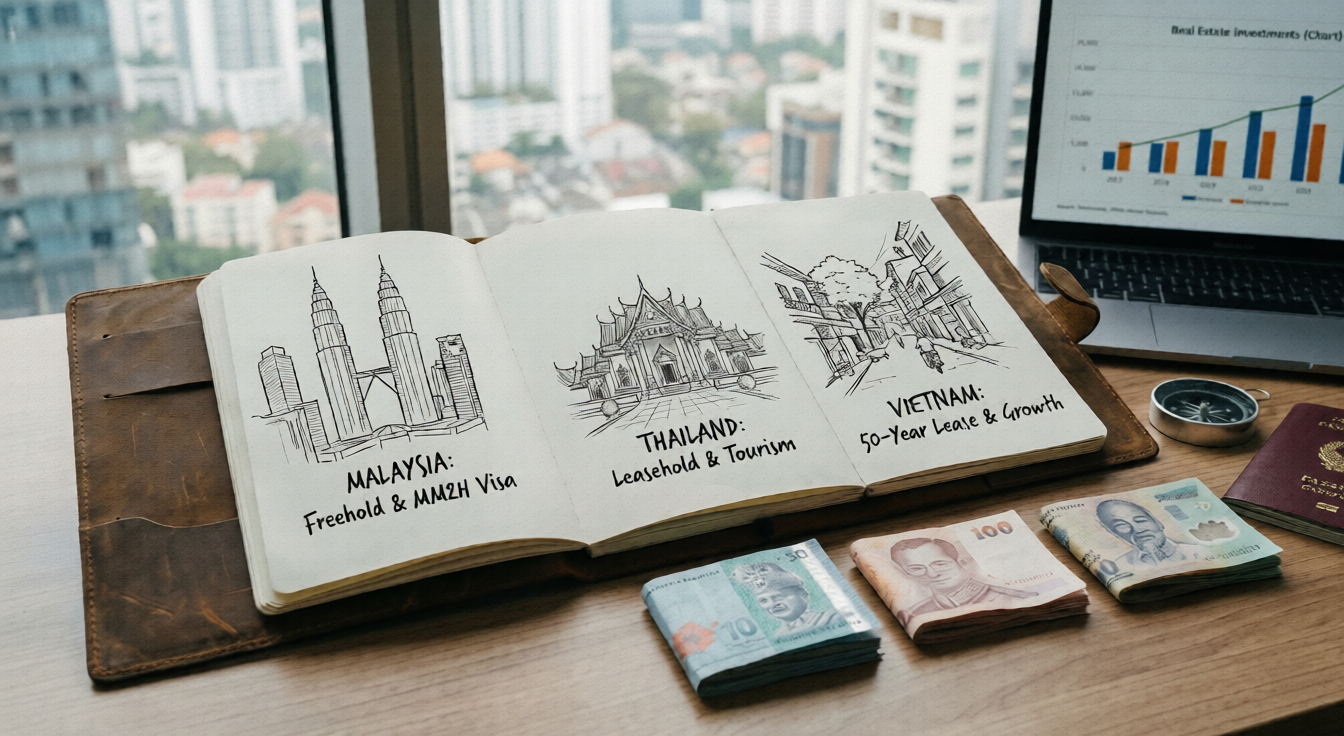
If you are looking to invest in Southeast Asian real estate in 2026, you are likely staring at a map and torn between three major contenders: Malaysia, Thailand, and Vietnam.
Each country offers a completely different proposition. Thailand is the tourism king. Vietnam is the high-growth “tiger” economy. And Malaysia? Malaysia is the quiet achiever that offers something the other two don’t: Stability and Ownership.
As a realtor based in Kuala Lumpur, I help international clients navigate this choice every day. The answer isn’t always “Malaysia”—it depends on your risk appetite and goals.
Here is the honest, head-to-head comparison for 2026.
Round 1: Ownership Rights (The “Freehold” Factor)
This is the most critical difference that many investors overlook until it’s too late.
🇲🇾 Malaysia: The Only “True” Ownership Malaysia is the only country in this comparison that allows foreigners to own Freehold land and landed properties in their own name. You own the house, and you own the dirt it sits on.
-
The Rule: You generally need to buy above a minimum price threshold (e.g., RM600,000 or RM1,000,000 depending on the state and your MM2H tier).
-
The Verdict: If you want an asset you can pass down to your grandchildren, Malaysia wins.
🇹🇭 Thailand: Conditional Ownership Foreigners cannot own land in Thailand. Period.
-
The Rule: You can only own a condominium unit (Freehold) if the building’s foreign quota (49%) hasn’t been filled.
-
The Catch: If you want a villa or landed house, you are forced into a “Leasehold” arrangement (typically 30 years, renewable) or a complex company structure that the government is increasingly cracking down on.
🇻🇳 Vietnam: The 50-Year Rental Vietnam strictly prohibits private land ownership. The state owns all the land.
-
The Rule: Foreigners can only buy a 50-year leasehold (renewable for another 50 years).
-
The Risk: You are essentially paying up-front rent for 50 years. Additionally, there is a strict “Foreign Quota” of 30% per condo project. Once that cap is hit, you cannot buy.
Quick Comparison: Property Ownership Rights
| Country | Ownership Type | Can Foreigners Own Land? |
| Malaysia 🇲🇾 | Freehold (Houses, Land & Condos) | Yes (Subject to min. price) |
| Thailand 🇹🇭 | Freehold (Condos Only) / Leasehold (Land) | No (Strictly prohibited) |
| Vietnam 🇻🇳 | 50-Year Lease (Renewable) | No (State owns all land) |
Round 2: The “Visa” Connection (Can you live there?)
Buying a house doesn’t automatically mean you can live in it. This is where the 2026 policies have shifted the playing field.
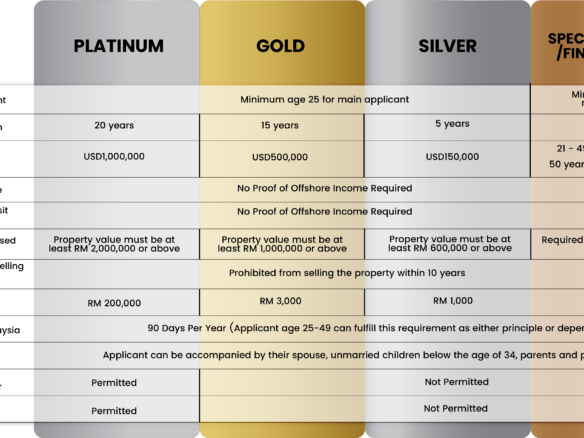
🇲🇾 Malaysia: The MM2H Advantage The newly revamped MM2H (2026 Tiers) directly links your property purchase to your visa.
-
Silver Tier: Buy a property worth RM600,000+ AND get a 5-year renewable visa for you and your family.
-
Gold/Platinum: Buy higher-value properties for 15 or 20-year visas.
-
Benefit: Your investment actually buys your residency.
🇹🇭 Thailand: The “Pay-to-Stay” Model Thailand’s “Thai Privilege” (formerly Elite Visa) is popular, but it is a membership fee, not an investment.
-
The Cost: You pay between THB 900,000 to THB 5 Million (approx. RM120k – RM650k) just for the visa. That money is gone. It does not go towards your property.
-
The Reality: You have to pay for the visa and pay for the property separately.
🇻🇳 Vietnam: The Difficult Choice Vietnam currently has no specific retirement or property-owner visa.
-
The Struggle: Most foreign investors rely on short-term tourist visas or set up a business (DT Visa) to stay, which comes with tax and audit implications. It is not designed for a relaxing retirement.
Visa Comparison: Can You Live There?
| Country | Visa Program | Type of Cost | Can Property Purchase Get You a Visa? |
| Malaysia 🇲🇾 | MM2H (Silver, Gold, Platinum) | Investment (Property + Fixed Deposit) | Yes (Directly linked) |
| Thailand 🇹🇭 | Thai Privilege (Elite Visa) | Membership Fee (Sunk Cost) | No (Must pay fee separately) |
| Vietnam 🇻🇳 | None (Tourist/Business Only) | N/A (Short-term renewals) | No (Strictly separate) |
Round 3: Rental Yields & ROI
🇹🇭 Thailand (The Yield King)
-
Where: Phuket, Pattaya, Bangkok.
-
Yields: 5% – 8% (higher in tourist hotspots).
-
Pros: Massive tourism numbers ensure high occupancy for Airbnb-style rentals.
-
Cons: High competition and managing short-term rentals can be a headache.
🇻🇳 Vietnam (The Capital Growth Play)
-
Where: Ho Chi Minh City, Hanoi.
-
Yields: 3% – 5%.
-
Pros: Vietnam is a booming emerging market. Property prices are rising fast as the middle class explodes.
-
Cons: Getting your money out of Vietnam can be difficult due to strict currency controls. Scams involving “fake” projects are also a risk in 2026.
🇲🇾 Malaysia (The Stable Wealth Preserver)
-
Where: KLCC, Mont Kiara, Bukit Jalil.
-
Yields: 4% – 5%.
-
Pros: Steady, consistent returns. The rental market is fueled by expats, professionals, and international students.
-
Cons: Lower “boom” potential than Vietnam, but significantly lower risk.
The Verdict: Which One is For You?
| Choose Vietnam If… | Choose Thailand If… | Choose Malaysia If… |
| You are a high-risk investor chasing maximum capital appreciation and don’t plan to live there full-time. | You want a holiday home for short stays and prioritize “beach lifestyle” over asset ownership rights. | You want Freehold ownership, a Visa for your family, and a safe, English-speaking environment for long-term living. |
Final Thoughts
In 2026, Malaysia remains the most “investor-friendly” option for those who want legal security. The ability to own Freehold land in your own name is a privilege that is vanishing across Asia.
If you are looking for a property that grants you a lifestyle, a visa, and a solid asset, Malaysia is the clear winner.
Are you confused about the new MM2H Tiers or where to find “Silver Tier” compliant properties?
Drop me a message. I specialize in finding high-ROI new projects that fit perfectly with your visa application.

Join The Discussion